Skip to content
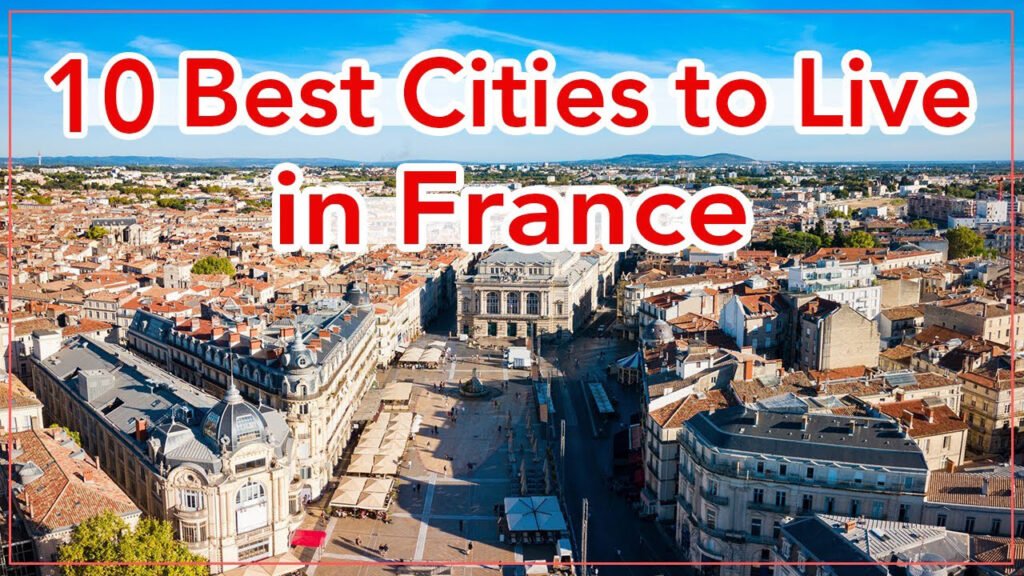
France is one of the most attractive global destinations for immigration, offering a high quality of life, robust job opportunities, and access to free higher education. Ranking seventh globally for its strong economy, the country boasts an excellent healthcare system and impressive safety rates, making it an ideal choice for individuals seeking a fresh start in a developed nation.
Here is an in-depth breakdown of the Top 10 best cities to live in France for work, studying, and immigration—ranked by quality of life, job availability, salary levels, and cost of living.
10. Angers

Located in western France near the Loire River, Angers is a quiet, beautiful, and historical city. Although not very large, it has topped the list of the most attractive places to live for three consecutive years according to the ranking by the Association of Cities and Villages. It remains a preferred destination for students and immigrants seeking tranquility and reasonable living costs.
- Education: Home to the University of Angers, offering reputable higher education in humanities, natural sciences, medicine, and engineering.
- Job Market: High demand exists for workers in the medical and pharmaceutical fields, as well as landscaping and agriculture. However, overall job opportunities are limited compared to larger metropolitan areas.
| Financial Metrics (Angers) | Value |
| Average Monthly Income (per individual) | $2,900 |
| Monthly Cost of Living (excluding rent) | $1,100 |
9. Rennes

Rennes, the capital of the Brittany region, seamlessly combines history and modernity. Famous for its vibrant festivals and traditional cuisine, its charming old city features half-timbered houses, narrow streets, and the historic Saint-Pierre Cathedral.
- Demographics & Education: Approximately 30% of the population consists of students, half of whom are international. The city hosts two large universities alongside specialized institutes for technology, medicine, education, and chemistry.
- Job Market & Climate: Strong demand exists for specialists in information technology and cybersecurity. Drawbacks include limited opportunities in certain fields and a climate characterized by frequent rainfall throughout the year.
| Financial Metrics (Rennes) | Value |
| Average Monthly Income (per individual) | $2,700 |
| Monthly Cost of Living (excluding rent) | $1,000 |
8. Montpellier

Situated on the Mediterranean coast in southern France, Montpellier is a strikingly beautiful city rich in museums, theaters, music festivals, and green spaces. Its historic Écusson center showcases medieval architecture and narrow streets.
- Infrastructure & Lifestyle: It is considered the youngest city in France, with over 55% of its population comprised of students and professionals under age 35. Montpellier features developed infrastructure, an expansive public transit network, and moderate housing prices.
- Education: It houses the University of Montpellier (ranked among the top four universities in France and home to Europe’s oldest faculty of medicine) as well as the business school at Paul Valéry University.
- Drawbacks: The job market is somewhat small, particularly for specialized roles, and public transit can experience slowdowns during peak hours.
| Financial Metrics (Montpellier) | Value |
| Average Monthly Income (per individual) | $2,400 |
| Monthly Cost of Living (excluding rent) | $1,000 |
7. Marseille

As the second-largest city in France after Paris, Marseille sits on the southern Mediterranean coast. Known for its warm, sunny weather year-round and historic Old Port, it offers a rich cultural mix, notably represented by the Museum of European and Mediterranean Civilizations.
- Job Market: The coastal nature of Marseille supports careers in logistics, shipping, tourism, port work, and seamanship. In addition, there are opportunities in construction, pharmaceuticals, information technology, crafts, medical fields, and software programming.
- Drawbacks: Certain areas exhibit higher crime rates than other cities, and strong proficiency in the French language is essential for work and social integration.
| Financial Metrics (Marseille) | Value |
| Average Monthly Income (per individual) | $2,300 |
| Monthly Cost of Living (excluding rent) | $1,200 |
6. Strasbourg

Positioned in eastern France directly along the German border, Strasbourg plays a pivotal role in European politics and culture as the seat of the European Parliament. Its rich culture includes the Strasbourg Cathedral (a UNESCO World Heritage site), diverse museums, theaters, art exhibitions, and a dining scene featuring both French and German culinary traditions.
- Education & Infrastructure: The city features the University of Strasbourg, the National Institute of Applied Sciences, and a top-tier business school, backed by advanced transportation networks.
- Drawbacks: Winter temperatures can be harsh and cold for much of the year, and the cost of living is somewhat higher than in several other French cities.
| Financial Metrics (Strasbourg) | Value |
| Average Monthly Income (per individual) | $2,300 |
| Monthly Cost of Living (excluding rent) | $1,200 |
5. Bordeaux

Located in southwestern France along the Garonne River, Bordeaux is often referred to as “Little Paris”. The city radiates old European charm through grand architectural sites like the Place de la Bourse—featuring majestic columns and a mirror-like water feature—and the Saint-Michel Basilica, famous for its tall bell tower and stained glass windows.
- Job Market: Supported by a concentration of economically robust corporations, Bordeaux provides abundant opportunities in aviation, shipbuilding, banking, tourism, agriculture services, and education.
- Drawbacks: High rental prices impact certain districts, and candidates must possess strong French language skills to enter the local employment market.
| Financial Metrics (Bordeaux) | Value |
| Average Monthly Income (per individual) | $2,600 |
| Monthly Cost of Living (excluding rent) | $1,100 |
4. Toulouse

As the fourth-largest city in France, Toulouse is situated in the southwest and is affectionately called the “Pink City” due to the distinctive pink-colored bricks of its traditional architecture. Its primary historic landmark is the Basilica of Saint-Sernin, the largest Romanesque church in the region.
- Aerospace Hub & Job Market: Toulouse serves as the European capital of the aerospace industry, hosting headquarters and facilities for Airbus, Thales, the French National Space Center (CNES), and Paul Sabatier University (renowned for aviation research). Additional institutions include the Federal University, INSA Engineering School, the Toulouse School of Fine Arts, and the National Polytechnic Institute. Consequently, engineering, tech, and scientific research roles are exceptionally strong.
- Lifestyle: Offering warmer, sunnier weather than northern cities, Toulouse is significantly more affordable than Paris or Lyon. It hosts a welcoming local population and a large international community.
| Financial Metrics (Toulouse) | Value |
| Average Monthly Income (per individual) | $2,900 |
| Monthly Cost of Living (excluding rent) | $1,000 |
3. Nice

Nice is a world-renowned coastal city on the French Riviera in southern France. Positioned near the Italian border, it blends an elegant French lifestyle with an Italian flair. The city boasts a mild climate, famous beaches, and a vibrant cultural calendar highlighted by its annual carnival alongside the Matisse and Chagall museums.
- Economy & Industry: Beyond primary industries in tourism, hospitality, and dining, Nice maintains active manufacturing in clothing, furniture, food processing, perfume, electronics, and souvenirs. On its outskirts, high-tech hubs and research laboratories focus on biotechnology, environmental innovations, and agricultural solutions.
- Education: Educational institutions include commercial institutes, technical schools, and Côte d’Azur University, which excels in physics, engineering, biomedical tech, and natural sciences.
- Drawbacks: Similar to Paris, Nice is expensive and experiences heavy tourist crowds, particularly during the summer. Finding employment outside the services or tourism sectors can be challenging.
| Financial Metrics (Nice) | Value |
| Average Monthly Income (per individual) | $2,600 |
| Monthly Cost of Living (excluding rent) | $1,100 |
2. Lyon

Situated in southeastern France at the confluence of the Rhône and Saône rivers, Lyon is the country’s second-largest metropolitan center. Renowned as the capital of French cuisine, the city is famous for traditional eateries serving regional specialties. It hosts the world-famous annual Festival of Lights and features a UNESCO World Heritage historic center, Renaissance architectural gems like the Lyon Cathedral and Notre-Dame de Fourvière Basilica, and the futuristic, spaceship-shaped Musée des Confluences.
- Education & Business: Lyon serves as a major commercial center. High-ranking institutions include the École Normale Supérieure (ENS), the National Institute of Applied Sciences (INSA), and EM Lyon Business School.
- Job Market: Employment demand is high across diverse fields, including sales, logistics, tourism, information technology, engineering, medicine, and education.
| Financial Metrics (Lyon) | Value |
| Average Monthly Income (per individual) | $2,900 |
| Monthly Cost of Living (excluding rent) | $1,200 |
1. Paris

Taking the top spot is Paris, the capital and largest city of France. Universally recognized as the “City of Light,” it stands as a global epicenter for romance, art, fashion, and culture. World-famous landmarks include the Eiffel Tower, the Louvre Museum, Notre-Dame Cathedral, and the Arc de Triomphe.
- Economic Powerhouse: As the beating heart of France’s economy, Paris offers unmatched career opportunities, particularly across banking, luxury fashion, tourism, tech, and higher education. If you want to discover and compare job opportunities across neighboring nations, check out our detailed guide on the Best Countries to Work in Europe.
- Prestigious Education: The city houses elite institutions, such as Sorbonne University, Paris-Dauphine University, Paris-Saclay University, and the École Normale Supérieure.
- Drawbacks & Benefits: While residents face high living costs and year-round urban congestion, these factors are balanced by world-class public transportation, superior healthcare systems, and top-tier educational standards.
| Financial Metrics (Paris) | Value |
| Average Monthly Income (per individual) | $3,500 |
| Monthly Cost of Living (excluding rent) | $1,200 |