Skip to content
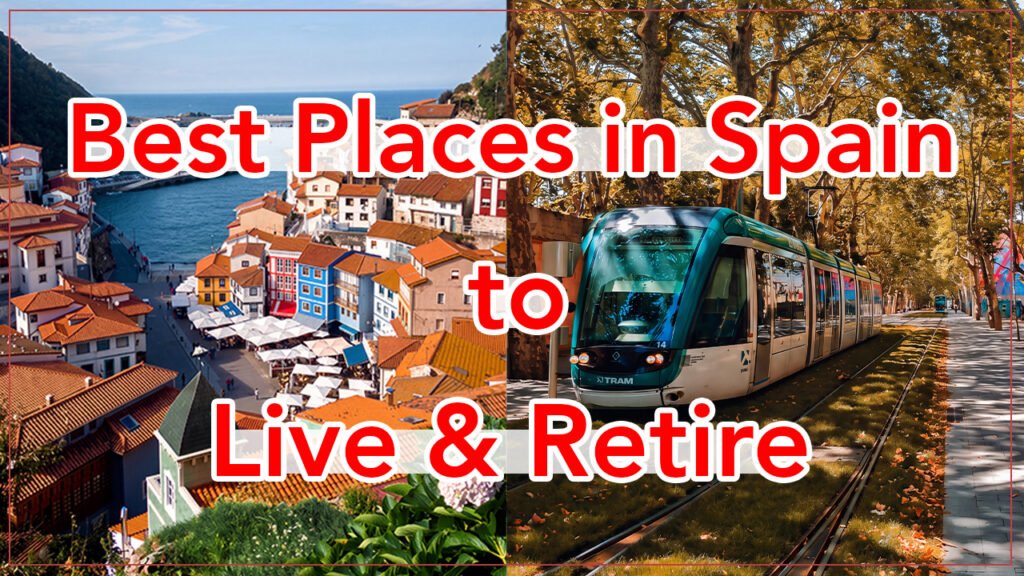
Spain stands out globally as one of the most attractive destinations for retirement. Boasting over three hundred days of sunshine annually, a world-class healthcare system, and a cost of living that remains significantly more reasonable than much of Western Europe, the country offers an exceptional balance of peace, infrastructure, and refined living.
Determining the ideal destination depends on individual financial plans, healthcare requirements, and lifestyle preferences. Below is a comprehensive guide to The 10 Best places to Live and Retire in Spain, complete with financial breakdowns, climate insights, and key regional highlights.
Table of Contents
10. Seville: The Cultural Heart of Andalusia

Seville offers authentic Andalusian tradition paired with modern, pedestrian-friendly infrastructure. Walking through its historic districts is effortless, and the overall cost of living sits roughly 30% lower than in major metropolises like Madrid or Barcelona. Relocating here grants access to large-city amenities and advanced medical centers without the stress of urban congestion or inflated housing prices.
| Financial Metric | Estimated Cost |
| Monthly Cost of Living (per person, excl. rent) | ~€700 |
| Monthly Rent (1-Bedroom Apartment) | €600 – €1,000 |
Healthcare & Safety
The quality of both public hospitals and private centers in Seville is exceptional. English-speaking doctors and specialists are widely available in the private sector, offering quick turnaround times. Due to healthy competition among local clinics, private health insurance premiums for retirees tend to be lower here than in coastal tourist hubs. Safety levels are remarkably high; violent crime is virtually non-existent, with concerns largely limited to minor petty theft in tourist-heavy zones like the Santa Cruz district.
Climate & Environment
Summers in Seville are intensely hot, particularly throughout July and August. Conversely, winters are exceptionally mild, sunny, and accompanied by light rainfall. The natural setting features expansive green pathways along the Guadalquivir River and within Maria Luisa Park. The local terrain is flat and free of steep inclines or high coastal humidity, making it ideal for daily walking.
Daily Life & Community
Seville contains the largest historic city center in Europe, configured almost entirely as a vast pedestrian zone. Public transportation is excellent, and the evening atmosphere is culturally vibrant yet relaxed. The expat community is moderate in size, which encourages natural integration into the local Spanish lifestyle.
9. Mallorca: Mediterranean Luxury with European Infrastructure

Mallorca—and specifically its capital, Palma—combines stunning island nature with top-tier European infrastructure. The island features modern regional hospitals and an international airport connecting directly to major global capitals. Living environments range from bustling coastal stretches to tranquil villages nestled in the Tramuntana Mountains.
| Financial Metric | Estimated Cost |
| Monthly Cost of Living (per person, excl. rent) | ~€900 |
| Monthly Rent (1-Bedroom Apartment) | €1,000 – €1,300 |
Healthcare & Safety
Healthcare quality on the island is outstanding, supported by specialized reference facilities such as Son Espases Hospital and Palmaplanas Hospital. Most private medical centers employ English- and German-speaking staff, streamlining senior care and insurance coverage. Crime rates across Mallorca are extremely low, outside of occasional seasonal pickpocketing in dense tourist areas.
Climate & Environment
Summers are warm to hot, cooled by marine breezes, though humidity rises in August. Winters remain mild and pleasant, with light rainfall occurring mostly during autumn. The landscape is varied and scenic, featuring sandy beaches, secluded coves, and hiking routes through the UNESCO-listed Tramuntana Mountains.
Daily Life & Community
The pace of life is quiet and structured during the winter months, transforming into a vibrant atmosphere during peak summer. Public transit and regional bus networks are reliable. Because Mallorca hosts a well-established international community, newcomers can build social connections easily without needing immediate fluency in Spanish. The primary trade-offs are higher real estate costs—roughly 25% higher than Seville due to island geography—and summer tourist crowds.
8. Barcelona: World-Class Culture & Urban Coastal Living

Barcelona blends a dynamic coastal setting with first-class urban amenities. It naturally attracts retirees seeking deep cultural diversity, world-renowned medical infrastructure, and a highly walkable environment that eliminates the need for a personal vehicle.
| Financial Metric | Estimated Cost |
| Monthly Cost of Living (per person, excl. rent) | ~€800 |
| Monthly Rent (1-Bedroom Apartment) | €1,200 – €1,500 |
Healthcare & Safety
Barcelona serves as a global hub for advanced medicine, housing premier reference institutions like Hospital Clínic and Hospital Sant Joan de Déu. Multilingual medical professionals operate across all major private facilities, diagnostic turnarounds are fast, and the region features some of Europe’s top specialized orthopedic and ophthalmic centers. While general safety regarding serious crime is strong, opportunism and pickpocketing in transit hubs and tourist zones remain notable downsides.
Climate & Environment
The coastal climate produces warm to hot summers with high humidity in July and August, making air conditioning essential. Winters remain very mild and comfortable. Nature inside the urban perimeter is uniquely structured: city beaches like Barceloneta sit minutes away from elevated forested areas like Montjuïc and Collserola Park.
Daily Life & Community
Daily life in Barcelona is energizing, driven by a rich blend of Catalan and Spanish culture. Navigation is straightforward thanks to wide grid avenues—such as those in the Eixample district—and a comprehensive metro system. The expat community is massive and diverse, allowing for easy social integration in English. However, high rental costs, constant tourist density, and street theft require consideration.
7. Granada: Mountain Splendor & Unmatched Value

Granada offers a distinct mix of mountain scenery, historical depth, and traditional Andalusian hospitality, including the famous custom of serving free tapas with every drink order. Housing costs remain remarkably low compared to other regional destinations, making it an ideal choice for retirees managing fixed incomes.
| Financial Metric | Estimated Cost |
| Monthly Cost of Living (per person, excl. rent) | ~€700 |
| Monthly Rent (1-Bedroom Apartment) | €600 – €800 |
Healthcare & Safety
Healthcare standards are high, anchored by the Virgen de las Nieves reference hospital and the modern Health Sciences Technology Park hospital. Private care is prompt, featuring state-of-the-art medical equipment. Safety levels across Granada are strong, with low crime rates overall; minor pickpocketing is mostly confined to narrow streets in the historic Albaicín quarter.
Climate & Environment
Summers are warm and dry, cooling down significantly at night due to the influence of the adjacent Sierra Nevada range. Winters are crisp and cool, with snow capping the nearby peaks. Sunlight is abundant year-round, and low humidity levels benefit respiratory health. The surrounding nature allows residents to ski in the Sierra Nevada mountains in the morning and reach the beaches of the Costa Tropical in just 40 minutes.
Daily Life & Community
Granada balances a relaxed pace with the subtle energy of a historic university city. Walking is smooth across the flat central district, though historic quarters feature steep cobblestone inclines. Public transport and light rail connections are efficient. The expat community is moderate, making basic Spanish helpful for daily routines.
6. Madrid: Grand Capital Infrastructure & Elite Services

As Spain’s capital, Madrid provides retirees with the nation’s highest concentration of civic infrastructure, grand architectural monuments, world-famous art museums, and an exceptional public transit network. It appeals to those seeking an active cultural calendar, premier healthcare networks, and effortless international travel via the Adolfo Suárez Madrid–Barajas airport hub.
| Financial Metric | Estimated Cost |
| Monthly Cost of Living (per person, excl. rent) | ~€900 |
| Monthly Rent (1-Bedroom Apartment) | €1,000 – €1,500 |
Healthcare & Safety
Madrid leads the nation in medical infrastructure, boasting massive, globally recognized hospital systems such as La Paz and Gregorio Marañón. Multilingual specialists are widely available, and private insurance plans offer direct access to top-tier care. Madrid ranks among the safest major capitals in Europe, though standard awareness of pickpockets in central squares (like Puerta del Sol) and busy metro cars is recommended.
Climate & Environment
Summers in Madrid are dry and intensely hot, often surpassing 38°C (100°F) in July and August, prompting many residents to travel to the coast. Winters are colder than in coastal regions, though conditions remain dry and clear. Green spaces are abundant, including historic sites like Retiro Park and Casa de Campo, alongside quick access to the nearby Sierra de Guadarrama mountains.
Daily Life & Community
Daily routines in Madrid benefit from wide pedestrian avenues and a world-class transit system. The city hosts the famous Golden Triangle of Art—the Prado, Reina Sofía, and Thyssen-Bornemisza museums—all within short walking distance of one another. The expat population is large and international, supporting an easy transition into local life. The main trade-offs are the absence of a coastline, winter cold spells, and intense summer heat.
5. San Sebastián: Culinary Mastery & Northern Elegance

Located in the Basque Country of northern Spain, San Sebastián offers a refined standard of living defined by lush green coastal landscapes, tranquil European atmosphere, and world-class culinary prestige. It caters to retirees looking for stability, security, and a sophisticated pace of life.
| Financial Metric | Estimated Cost |
| Monthly Cost of Living (per person, excl. rent) | ~€800 |
| Monthly Rent (1-Bedroom Apartment) | €800 – €1,300 |
Healthcare & Safety
Medical care is backed by the Basque regional health system, Osakidetza, widely regarded as one of the most efficient in Spain. Hospital wait times are minimal, preventative care standards are exceptional, and English- and French-speaking doctors are common. San Sebastián ranks among Spain’s safest urban areas, with crime virtually non-existent even late at night.
Climate & Environment
The northern Atlantic climate brings mild, pleasant summers without severe heatwaves. Winters are cool and damp. While sunny days are less frequent than in the south, steady year-round rainfall keeps the surrounding mountains bright and green. The city centers on the iconic, crescent-shaped La Concha Bay, framed by green peaks like Mount Igeldo, offering picturesque coastal walks.
Daily Life & Community
Living costs here are high, positioning San Sebastián among the most expensive real estate markets in Spain—roughly 35% higher than Valencia or Seville. Daily life is calm, structured, and elegant. Public transit via the Dbus network is punctual, and the French border is only a short drive away. The expat community is relatively compact and composed largely of affluent European residents.
4. Málaga: Sun-Drenched Coastal Hub with High Accessibility

Málaga sits as a vibrant hub along the southern Mediterranean coast. Renowned for its high levels of English proficiency, historical architecture, and strong regional flight connections, it provides an inviting setting for international retirees.
| Financial Metric | Estimated Cost |
| Monthly Cost of Living (per person, excl. rent) | ~€700 |
| Monthly Rent (1-Bedroom Apartment) | €800 – €1,300 |
Healthcare & Safety
Healthcare services are excellent, supported by well-equipped regional public facilities and private institutions. Navigating medical needs is straightforward, as most clinical staff speak English. Safety levels are exceptionally high, with low crime rates establishing Málaga as one of Europe’s most stable retirement destinations.
Climate & Environment
Málaga enjoys warm, sunny summers with moderate humidity. Winters are short, remarkably mild, and entirely free of frost or severe temperature drops. Nature centers on maritime activity, with stunning sandy beaches, nearby rocky coves, clear waters for boating, and scenic coastal paths.
Daily Life & Community
The city maintains a balanced pace, lively during the summer months and tranquil in the winter. Historic areas feature accessible walking paths, while regional bus networks connect the broader coast efficiently. The expat community is large, established, and diverse, making social integration seamless. Living costs remain in the mid-to-upper range—more affordable than Barcelona or Mallorca, but slightly higher than inland southern cities like Seville.
3. Nerja: Traditional Village Charm on the Coast

Nerja captures the classic appeal of a white-washed Andalusian village while maintaining modern coastal conveniences. Free from high-rise concrete developments or heavy commercial strips, it offers a tight-knit community, dramatic sea views, and a mild microclimate sheltered by surrounding mountain ranges.
| Financial Metric | Estimated Cost |
| Monthly Cost of Living (per person, excl. rent) | ~€800 |
| Monthly Rent (1-Bedroom Apartment) | €700 – €1,000 |
Healthcare & Safety
While Nerja does not host a large regional public hospital directly, local clinics provide solid primary care. Retirees often utilize private facilities in town or access Axarquía Hospital in neighboring Vélez-Málaga, located 20 minutes away. English-speaking doctors, pharmacists, and expat-focused care services are widely available. Due to the town’s small scale, crime is virtually zero, offering complete peace of mind.
Climate & Environment
Protected by the Almijara mountains and warmed by the Mediterranean, Nerja experiences over 300 days of sunshine annually. Summers are balanced by coastal breezes, while winters are mild and sunny. The coastline features secluded cove beaches and scenic viewpoints like the famous Balcón de Europa, alongside mountain trails in nearby natural parks.
Daily Life & Community
Daily living is peaceful and unhurried outside the peak summer holiday season. The historic center is easy to navigate on foot, though residential properties built on surrounding hillsides may require a personal vehicle or local bus. The expat community makes up a significant portion of the local population, creating an active social network for international residents.
2. Alicante: Affordable Coastal Living & Sunlit Promenades

Located at the heart of the Costa Blanca, Alicante is an ideal choice for retirees seeking an affordable coastal environment. It features a busy international airport, expansive sandy beaches, and flat pedestrian infrastructure—all at price points lower than most major Spanish coastal cities.
| Financial Metric | Estimated Cost |
| Monthly Cost of Living (per person, excl. rent) | ~€800 |
| Monthly Rent (1-Bedroom Apartment) | €700 – €900 |
Healthcare & Safety
Healthcare infrastructure is robust, headlined by the Alicante General University Hospital and private provider networks like Quirónsalud. Multilingual personnel are common throughout both public and private sectors due to the high density of foreign residents, keeping wait times low and health insurance rates competitive. Safety standards are reliable, with crime mostly restricted to seasonal pickpocketing along tourist promenades.
Climate & Environment
Alicante averages over 320 sunny days per year with minimal rainfall, creating an environment well-suited for joint and bone comfort. Summers are warm and tempered by ocean breezes, while winters are mild and dry. City life integrates smoothly with nature, from daily walks along the palm-lined Explanada de España to relaxing at Postiguet Beach.
Daily Life & Community
Moving around Alicante is simple thanks to its flat terrain, broad walkways, and modern coastal tram network that links the city center to neighboring beach towns. The expat community is well-integrated and extensive, allowing for comfortable day-to-day living in English. The primary trade-off is a smaller collection of major art museums compared to regional capitals like Madrid or Valencia.
1. Valencia: The Ideal Balance of Urban Culture & Coastal Lifestyle

Valencia takes the top spot by effortlessly combining major-city culture, world-class infrastructure, and a relaxed coastal setting—without the overwhelming congestion of Madrid or the steep housing costs of Barcelona.
| Financial Metric | Estimated Cost |
| Monthly Cost of Living (per person, excl. rent) | ~€800 |
| Monthly Rent (1-Bedroom Apartment) | €900 – €1,300 |
Healthcare & Safety
Healthcare in Valencia is world-class, anchored by top-ranked reference facilities such as La Fe Hospital. Access across the city is effortless via public transit, and English-speaking doctors are readily accessible in private networks. Safety levels are remarkably high; serious crime is virtually non-existent, and minor pickpocketing is limited to heavy tourist hubs.
Climate & Environment
Summers are warm, reaching peak humidity in August with average temperatures around 32°C (90°F). Winters are very mild, with temperatures rarely dipping below 10°C (50°F). Valencia’s standout natural feature is the Turia Gardens—a continuous nine-kilometer urban park built along a transformed riverbed that runs straight through the city center. This allows residents to walk across the city surrounded by greenery without crossing active car traffic.
Daily Life & Community
With completely flat terrain, extensive cycling infrastructure, and comprehensive metro lines, moving through Valencia is smooth and accessible. Living costs remain fair—running 20% to 30% lower than Madrid or Barcelona—making it well-suited for moderate retirement budgets. The expat community is thriving and integrated seamlessly into local neighborhoods, offering an exceptional quality of life.
Top 10 Summary Comparison
| City | Cost of Living (Excl. Rent) | Rent (1-Bed Apartment) | Key Highlight | Primary Consideration |
| Seville | ~€700 / mo | €600 – €1,000 / mo | Rich culture, flat walking paths | High summer heat |
| Mallorca | ~€900 / mo | €1,000 – €1,300 / mo | Island luxury, top medical care | Higher real estate costs |
| Barcelona | ~€800 / mo | €1,200 – €1,500 / mo | Global hub, high walkability | Pickpocketing, elevated rent |
| Granada | ~€700 / mo | €600 – €800 / mo | Free tapas, mountain & sea access | Cooler winter temperatures |
| Madrid | ~€900 / mo | €1,000 – €1,500 / mo | World-class arts & transit network | No beach, seasonal temperature extremes |
| San Sebastián | ~€800 / mo | €800 – €1,300 / mo | Elite gastronomy, top security | Frequent rainfall, high real estate prices |
| Málaga | ~€700 / mo | €800 – €1,300 / mo | Sun-drenched coast, widespread English | Summer traffic congestion |
| Nerja | ~€800 / mo | €700 – €1,000 / mo | Authentic village charm, mild climate | No direct rail link; hilly outlying areas |
| Alicante | ~€800 / mo | €700 – €900 / mo | Excellent value, 320+ sunny days | Fewer major cultural museums |
| Valencia | ~€800 / mo | €900 – €1,300 / mo | Turia Gardens, ideal balance of size & cost | Rising housing demand, humid August |
*Financial metrics and cost estimates are compiled using figures from the Numbeo Cost of Living Database.