Skip to content
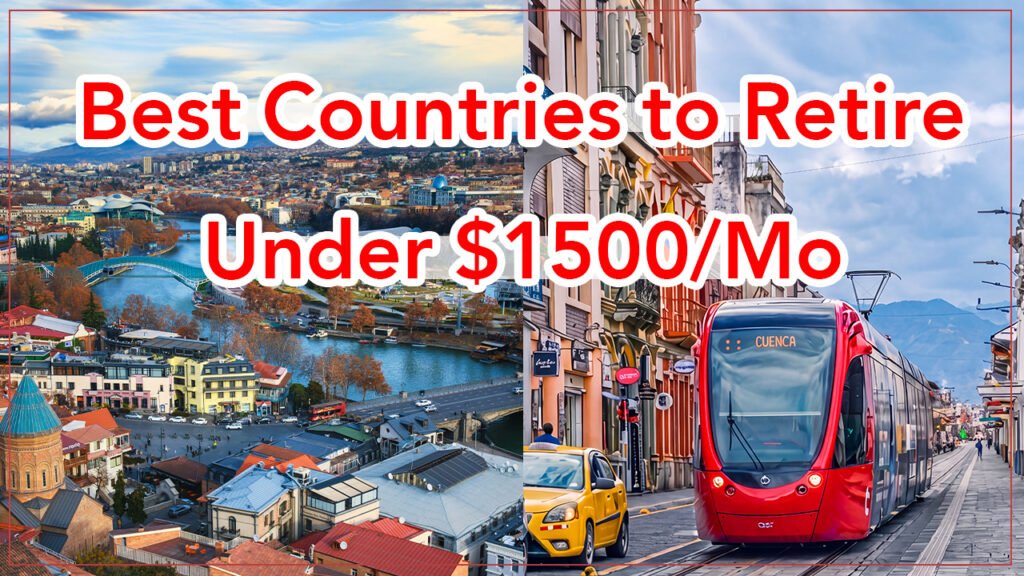
The global landscape offers an incredible array of lifestyles, yet many destinations demand astronomical living expenses that quickly drain retirement savings. Fortunately, numerous nations combine a high standard of living, breathtaking natural scenery, advanced healthcare infrastructure, and exceptional safety. These regions provide an ideal setting for individuals seeking a fresh start after retirement without financial strain. Exploring the best countries to retire on $1500 a month reveals options grounded in real living costs, safety levels, healthcare quality, regional weather patterns, ease of settlement, and overall lifestyle appeal.
10. Georgia

Georgia attracts American retirees due to its extremely low cost of living, straightforward tax laws compared to other nations, and a visa-free stay of up to one full year, saving expats the headache of residency paperwork upon arrival. Furthermore, the overall standard of living is well-suited for an income below fifteen hundred dollars, as it is significantly cheaper than famous European retirement destinations while approaching the low costs seen in popular Asian countries.
Private clinics are adequate and competent, although complex medical procedures require traveling abroad. Hospitals in the capital get the job done, though English-speaking doctors remain rare outside major urban centers. Doctor visits and simple procedures are inexpensive, allowing expats to pay cash without needing costly health insurance.
Summers are hot and dry in low-lying areas, with temperatures exceeding thirty degrees Celsius. Winters are very cold, accompanied by snow and rain in major cities. Sunshine hours remain long throughout the year, although mountainous regions experience frequent cloud cover during certain seasons.
Stunning scenery defines the region, featuring the soaring Caucasus Mountain range and the Black Sea coast. Landscapes encourage retirees to stay active, walk in the open air, and hike in the mountains without spending money on entertainment. Additionally, street safety is exceptionally high with very low crime rates, allowing retirees to walk at night securely and peacefully. Major cities are walkable and served by very cheap metro systems and ride-hailing apps, alongside a sizable expat community. The most noticeable drawback is the language barrier, especially with older adults and in service sectors, as English is not widely spoken outside the younger generation.
Top Georgian Cities for Retirees
- Tbilisi: As the capital and service hub, Tbilisi acts as the heart of life and culture. Retirees choose it for diverse services, including large hospitals, pharmacies, shopping centers, and international restaurants. It houses the largest community of foreigners and retirees, making it easy to meet people and build a social circle. Public transportation is excellent and very cheap, while the vibrant lifestyle features museums and cultural activities year-round. Drawbacks include downtown traffic congestion and pollution in certain areas.
- Batumi: Offering the serenity of the sea and remarkable nature, Batumi is a coastal city on the Black Sea with a much calmer vibe than the capital. Retirees pick it for seaside walks along the beach promenade, fresh air, and expansive green spaces. Rents and food prices can be slightly cheaper than in Tbilisi, and life moves at a slower, less stressful pace. Drawbacks include less robust medical services, summer tourist crowds, very quiet winters, and less common English proficiency.
Visa and Cost Breakdown for Georgia
U.S. citizens can travel to Georgia and stay for a full year without a visa or proof of income.
| Expense Category | Average Monthly Cost (USD) |
| Cost of Living (per person, excluding rent) | $650 |
| Rent (1-bedroom apartment) | $350 – $550 |
9. Ecuador

Ecuador attracts retirees as one of the most affordable South American countries. Officially, it uses the U.S. dollar, saving American residents currency exchange hassles, while boasting a perpetual spring climate in the highlands. General standards of living are very affordable and well within budgets under fifteen hundred dollars. Modern private hospitals in major cities compete with international standards, and access to medical care is straightforward, with English-speaking doctors available in foreigner-heavy cities like Cuenca. Private health insurance prices are low compared to the U.S., and routine medical consultations cost very little.
Traditional summer and winter seasons do not exist in the literal sense. Weather remains spring-like and mild year-round in the mountains due to altitude, whereas it stays warm and humid on the coasts. Sunshine hours are long and stable most of the year, accompanied by light seasonal rains.
The stunning Andes Mountains, lush valleys, and Pacific beaches offer a peaceful, stress-free life, constantly inviting exploration without high costs. Safety levels vary by city; expat-concentrated areas are secure and quiet, although caution is necessary in certain local neighborhoods and larger cities due to relative crime rates. Relaxed and slow-paced lifestyles are perfect for unwinding away from big city stress, and public transport removes the need for a private car. Organized retiree communities thrive, particularly in Cuenca, and senior discounts provide half-price public transportation, reduced utility bills, event tickets, and value-added tax refunds. The most notable downside is the high elevation above sea level in famous mountain cities, which can initially cause discomfort for individuals with respiratory conditions.
Top Ecuadorian Cities for Retirees
- Cuenca: As Ecuador’s premier expat destination and a globally ranked retirement city, Cuenca hosts a large American community with active social clubs and organized events. Services are high quality, featuring excellent private hospitals, beautiful museums, and historic areas designated as UNESCO World Heritage sites. The city is comfortable, tranquil, and features cafes, restaurants, beautiful architecture, and mild weather year-round. Drawbacks include slightly higher service prices due to foreign presence and necessary altitude adjustment.
- Loja: Representing quietness and nature, Loja is much calmer than Cuenca and ideal for nature lovers seeking lower expenses. It sits close to natural reserves and beautiful green spaces, providing a peaceful environment for relaxation. Known as the musical capital of Ecuador, Loja possesses a distinct cultural and artistic spirit alongside high safety and an exceptionally friendly local community. The primary drawback is a much smaller expat community, meaning daily tasks may prove challenging without Spanish proficiency.
Visa and Cost Breakdown for Ecuador
U.S. citizens can enter Ecuador and stay for up to six months. Those wishing to stay long-term can apply for a retirement visa and receive a two-year residency by proving a monthly income of around fifteen hundred dollars.
| Expense Category | Average Monthly Cost (USD) |
| Cost of Living (per person, excluding rent) | $500 |
| Rent (1-bedroom apartment) | $250 – $400 |
8. Thailand

Thailand draws retirees by combining a low cost of living with a high quality of life that rivals developed nations, backed by a massive, well-organized expat community that makes settling in seamless from day one. Overall expenses remain very low, making the country ideal for moderate budgets under fifteen hundred dollars. World-class private hospitals are equipped with top-tier technology and western-trained physicians. Medical services in major and coastal cities are easily accessible, with healthcare staff speaking fluent English. Consultations and check-ups are inexpensive, making cash payments or local health insurance comfortable for any budget—consistently positioning it among the best countries in the world to retire in.
Elevated temperatures make summers hot and humid almost year-round, while winters remain warm, making the country ideal for retirees who dislike severe cold. Rainy seasons bring heavy downpours that must be considered due to high humidity. Stunning landscapes feature tropical beaches, tourist-friendly islands, and lush green mountains in the north. Healthy and restful lifestyles encourage swimming, outdoor walking, and unwinding without heavy financial burdens. Furthermore, crime rates against foreigners are extremely low, and the country is generally safe on the streets at all times. Cheap and varied public transit features sky trains, metros, and tuk-tuks. Heavy traffic congestion in the capital, Bangkok, remains the biggest drawback, alongside high heat and humidity throughout most of the year.
Top Thai Cities for Retirees
- Chiang Mai: As the mountainous capital of the north, Chiang Mai is one of Thailand’s most affordable full-service cities, perfect for retirees who appreciate nature and quietness. Filled with greenery, mountains, and historic temples, it enjoys cooler northern weather than coastal areas. It holds a massive, organized expat community offering activities, cheap local markets, fresh healthy food, and advanced medical and internet infrastructure. The main downside occurs during the crop-burning season between February and April, when smoke degrades air quality, alongside its distance from the ocean.
- Hua Hin: A serene coastal town favored by retirees, Hua Hin is located a few hours from the capital and blends seaside living with close medical services at reasonable costs. Renowned as the royal family’s vacation resort, the town is orderly, safe, clean, and famous for golf courses and wellness retreats. Life moves at a slow pace, perfect for relaxing on the beach and strolling through night markets. Its main drawback is that beaches are not quite as crystal-clear as those found on southern islands.
Visa and Cost Breakdown for Thailand
U.S. citizens can live long-term in Thailand through a retirement visa for individuals over fifty by showing a monthly income of around two thousand dollars, or through a high-income visa offering up to ten years of residency.
| Expense Category | Average Monthly Cost (USD) |
| Cost of Living (per person, excluding rent) | $600 |
| Rent (1-bedroom apartment) | $300 – $500 |
7. Colombia

Colombia attracts retirees thanks to its year-round spring climate in the highlands, welcoming locals, and diverse geography blending the Andes Mountains with ocean coasts. Living costs across the nation are very low, perfectly accommodating budgets below fifteen hundred dollars. Elite private hospitals in major cities rank among the best in South America, hold international accreditations, and are supported by English-speaking doctors and nurses. Policies for private health insurance are very affordable compared to the U.S., with routine visits and procedures priced reasonably.
Proximity to the equator means traditional seasons do not exist; instead, altitude dictates the weather. Elevated regions stay fresh and spring-like year-round, while coastal areas are warm and humid, receiving consistent sunshine alongside regular rainy periods. Green Andean ranges, tropical valleys, and beaches along both the Caribbean and Pacific encourage an active lifestyle involving park walks and mountain hikes at almost zero cost. Varying safety levels require attention; primary cities feature upscale, secure neighborhoods for expats, though general street vigilance remains necessary. Vibrant Latin culture fills the streets with music, art, culture, and outdoor cafes. Affordable public transit, such as Medellín’s metro or rapid bus systems, provides convenient mobility alongside extensive pedestrian zones. Growing expat communities thrive rapidly, especially in Medellín and Cartagena. Pleasant, warm spring weather year-round stands out as a primary feature—especially in Medellín, known as the City of Eternal Spring—eliminating the need for heating or air conditioning. Inexpensive fresh fruits, vegetables, and services are wrapped in a cheerful local atmosphere. Language presents the most prominent hurdle, as Spanish is essential for daily life, alongside heavy traffic in big cities and slow bureaucratic processes.
Top Colombian Cities for Retirees
- Medellín: As Colombia’s second-largest city and primary expat destination, Medellín is celebrated as the City of Eternal Spring. Weather stays temperate and pleasant year-round, saving on utility bills by removing the need for air conditioning or heaters. It features a modern metro network, excellent public transport, and world-class accredited private hospitals that rival top U.S. facilities. The expat community is massive and organized, making it easy to socialize through numerous activities and cafes. Drawbacks include heavy rush-hour traffic and slightly higher rent prices in upscale neighborhoods due to high demand from foreigners.
- Santa Marta: This Caribbean coastal town is much quieter and cheaper than larger cities, making it ideal for lovers of the sea and tropical nature. Located near Tayrona National Park, it offers a magical setting combining green mountains with the ocean. However, weather stays hot and humid year-round, requiring continuous air conditioning, while medical services are less advanced than those in Medellín.
Visa and Cost Breakdown for Colombia
U.S. citizens can enter Colombia and stay for up to six months visa-free. Those wishing to stay longer can apply for a retirement visa by proving a monthly income of just around one thousand dollars.
| Expense Category | Average Monthly Cost (USD) |
| Cost of Living (per person, excluding rent) | $850 |
| Rent (1-bedroom apartment) | $400 – $700 |
6. The Philippines

The Philippines attracts retirees, especially Americans, because its population speaks fluent English, eliminating language barriers entirely. Cheap living costs and tropical scenery across thousands of islands complement this linguistic advantage. Consideration of expenses shows they are considerably lower than in the U.S. or Europe, comparable to neighboring Southeast Asian countries like Thailand. Excellent private hospitals in major cities are equipped with modern technology. Fluent English spoken by doctors and nursing staff makes medical communication effortless, and consultations and tests remain affordable. Careful selection of health insurance providers is nonetheless necessary.
High temperatures make summers hot and humid most of the year, and true winter does not exist. Warm weather stays year-round, though the rainy season brings tropical storms and typhoons that should be factored into choosing a residence. Stunning nature features white sand beaches, clear waters, and endless tropical islands that create a peaceful, marine-focused lifestyle centered on diving, swimming, and beach walks at minimal expense. Security varies by area; tourist spots and expat centers are very safe, though certain southern regions should be avoided due to security concerns. Cheap local transport like jeepneys and tricycles operates alongside heavy major city traffic congestion. Widespread and friendly expat communities thrive due to easy communication in English with locals. Heavy traffic in large cities like Manila, alongside weaker infrastructure on remote islands that may cause occasional power or internet outages, forms the clearest drawback.
Top Philippine Cities for Retirees
- Dumaguete: Officially known as the City of Gentle People, Dumaguete stands as a top choice for retirees. It is a quiet university town with a seaside promenade close to everything, reducing the need for a car as most travel occurs on foot or via cheap tricycles. The foreign community is large and welcoming. Its limitations lie in healthcare and entertainment options compared to larger cities, requiring travel to Cebu for complex medical cases.
- Cebu: As the second-largest urban center in the country, Cebu blends modern city living with proximity to beaches and tropical islands. It features world-class hospitals, convenient transit, large malls, and an international airport. Modern apartments fit easily within a fifteen-hundred-dollar budget. Its main drawbacks are heavy traffic on primary city streets and higher rent costs.
Visa and Cost Breakdown for The Philippines
U.S. citizens can enter visa-free and extend their tourist stay locally for up to three continuous years.
| Expense Category | Average Monthly Cost (USD) |
| Cost of Living (per person, excluding rent) | $600 |
| Rent (1-bedroom apartment) | $200 – $500 |
5. Albania

Albania attracts American retirees as Europe’s most affordable beachfront destination, offering flexible residency rules and a favorable tax policy for expats. Very cheap overall living costs contrast favorably with the rest of Europe. Good quality care is delivered by private hospitals in the capital, although advanced care may require travel abroad. English or Italian is spoken by doctors in the capital, though services weaken outside major cities. Modestly priced cash consultations keep medical and dental care costs very low compared to Western Europe.
Hot and sunny summers grace the coast, while winters remain mild on the shore but grow cold and snowy in interior mountains. Magnificent nature features coastal beaches and mountain ranges that support a serene lifestyle, backed by Albania being one of Europe’s safest nations. Minibuses handle local transport, and major cities remain highly walkable. Rapidly growing expat communities expand along the coast and in the capital, although city infrastructure can occasionally feel underdeveloped.
Top Albanian Cities for Retirees
- Tirana: As the capital and cultural hub, Tirana serves as the best pick for those who want city life and complete amenities. Rent and living costs are far lower than in other European capitals, featuring top private hospitals, an international airport, and accessible entertainment. Café culture is strong, supported by wide pedestrian walkways, green areas, accessible transit, and an active expat scene. Its main drawbacks are being inland from the sea and experiencing traffic during peak hours.
- Saranda: Known as the pearl of the Albanian Riviera, Saranda is a coastal town looking directly over the sea, located close to the Greek island of Corfu. Life is quiet and slow, ideal for coastal relaxation. Local markets supply fresh, inexpensive seafood, fruits, and vegetables. Drawbacks include heavy tourist crowds during summer months, whereas winter turns very quiet with some seasonal businesses closing.
Visa and Cost Breakdown for Albania
U.S. citizens can travel to Albania and live for up to one full year without a visa or proof of income.
| Expense Category | Average Monthly Cost (USD) |
| Cost of Living (per person, excluding rent) | $800 |
| Rent (1-bedroom apartment) | $300 – $600 |
4. Indonesia

Indonesia attracts retirees by offering a luxurious tropical lifestyle at a low cost, especially on the island of Bali, globally famous for relaxation and spiritual retreats. Accessible for moderate budgets, living costs remain very low. Modern and internationally accredited private hospitals operate in Bali and the capital, Jakarta, with English-speaking doctors and nurses in major international centers. Reasonably priced check-ups and tests are standard, although complex cases require international health insurance or medical travel.
Year-round hot and humid conditions define summers, while winters are non-traditional, staying warm continuously. Heavy tropical rainy seasons must be considered when traveling between islands. Remarkable environments feature golden sand beaches, rainforests, and green terraced rice fields. Minimal costs support a healthy lifestyle centered on outdoor walks and meditation. Popular areas like Bali are safe for expats, though general precautions apply in large cities. Scooter rentals or private driver hires replace traditional public transit, as it remains limited, and peak tourist season traffic congestion in Bali remains a primary drawback.
Top Indonesian Cities for Retirees
- Ubud: As Bali’s cultural and spiritual heart, Ubud serves as a sanctuary for retirees who love nature, yoga, and quietness away from beach crowds. Surrounded by rainforests and rice terraces, the atmosphere encourages relaxation. A fifteen-hundred-dollar budget supports a comfortable lifestyle in serene surroundings with a health-focused expat community. However, it sits inland from the ocean and experiences main-street traffic.
- Senggigi: This quiet coastal town on Lombok neighbors Bali and is ideal for retirees who prefer quiet beaches away from Bali’s crowds, featuring calm waters, sunset views, and views of Mount Agung. Life is slower and cheaper than in Bali, making it perfect for island hopping, though medical facilities and nightlife are limited.
Visa and Cost Breakdown for Indonesia
Expats can reside in Indonesia via a retirement visa for individuals over fifty-five, requiring proof of a monthly income of around three thousand dollars.
| Expense Category | Average Monthly Cost (USD) |
| Cost of Living (per person, excluding rent) | $650 |
| Rent (1-bedroom apartment) | $250 – $500 |
3. Cambodia

Cambodia attracts retirees with Southeast Asia’s easiest residency rules, low living costs, and widespread daily use of the U.S. dollar. Regionally, expenses are very low, making it one of the most affordable expat options. Modern international hospitals concentrate in the capital, while regional town care remains basic. Fluent English or French is spoken by doctors in major private facilities. Cheap simple medical checks contrast with major surgeries that demand quick travel to neighboring Thailand, making international insurance essential.
Year-round hot and humid summers accompany short, warm winters. Localized flooding and road issues can arise during tropical rainy seasons. Tropical coasts along the Gulf of Thailand, beautiful islands, and wide rivers encourage a slow, beach-focused lifestyle at low cost. Main areas remain safe for expats, though minor bag-snatching in crowded streets requires awareness. Cheap tuk-tuks and app-based rides handle transit, while friendly expat communities concentrate in the capital and Sihanoukville. Basic public infrastructure in smaller towns, occasional power outages, and modest local medical services constitute the main drawbacks.
Top Cambodian Cities for Retirees
- Phnom Penh: As the capital and primary service hub, Phnom Penh offers top private hospitals, malls, and an active foreign community that fits comfortably within budget. It suits city lovers, though heavy traffic and hot weather persist year-round.
- Kampot: A quiet riverside town near the ocean, Kampot is favored by retirees seeking low-cost relaxation. It features scenic views, nearby mountains, and world-famous pepper farms. The small expat community uses bicycles or tuk-tuks, though medical services are limited, requiring travel to the capital for serious emergencies.
Visa and Cost Breakdown for Cambodia
U.S. citizens can enter Cambodia on a standard visa on arrival and extend it locally for a full renewable year for around three hundred dollars, without complex bank requirements or income proofs.
| Expense Category | Average Monthly Cost (USD) |
| Cost of Living (per person, excluding rent) | $600 |
| Rent (1-bedroom apartment) | $250 – $400 |
2. Bolivia

Bolivia attracts retirees as South America’s most affordable country, offering low living costs that allow comfortable living on modest budgets amidst unique Andean mountains. Adequate private hospitals serve large cities, but advanced care is limited in provinces. Rare English-speaking doctors practice outside investment hospitals. Cheap consultations and medications help expats, though they rely on private insurance or foreign travel for complex operations.
Mild to warm lowlands experience rain in summer, while high-altitude cities turn cold in winter and lower regions remain pleasant. Pristine nature for exploration at minimal cost features the Andes, the Altiplano plateau, and Lake Titicaca. Moderate safety prevails; violent crime is uncommon, but street theft and occasional political protests blocking roads require attention. Capital cable cars and cheap public transit serve commuters, though chaotic driving and traffic can prove tiring. Small and unorganized expat communities suit independent individuals compared to other nations. Breathing or heart conditions may face challenges due to high elevation in major cities.
Top Bolivian Cities for Retirees
- Santa Cruz de la Sierra: As Bolivia’s largest and most modern city, Santa Cruz serves as a primary expat destination. Located at a low elevation with warm tropical weather year-round, it avoids high-altitude oxygen issues. A fifteen-hundred-dollar budget provides high comfort and savings, backed by top private hospitals and modern malls. Humidity and traffic remain its main drawbacks.
- Sucre: The constitutional capital, known as the White City for its UNESCO-listed Spanish colonial architecture, enjoys a mild, spring-like climate that is calmer than Santa Cruz. Living costs are very low, providing a safe and simple setting for relaxation. Its moderate altitude may require adjustment, and advanced medical care is less extensive than in Santa Cruz.
Visa and Cost Breakdown for Bolivia
U.S. citizens can reside in Bolivia via an independent income visa by providing proof of a monthly income of one thousand dollars, granting renewable temporary residency.
| Expense Category | Average Monthly Cost (USD) |
| Cost of Living (per person, excluding rent) | $400 |
| Rent (1-bedroom apartment) | $150 – $300 |
1. Vietnam

Vietnam attracts retirees by delivering one of the lowest living costs globally, paired with stunning scenery, fresh food, and rapid economic growth that provides excellent city infrastructure. Exceptional deals for budget-conscious individuals stem from very cheap overall living costs. Accredited modern private hospitals in major cities are staffed by capable doctors and nurses, offering affordable check-ups and medical tests.
Hot and humid southern summers contrast with four clear seasons in the north. Mild southern winters and cool northern winters accompany tropical rains and seasonal typhoons impacting coastal areas. Long coastlines, sandy beaches, Ha Long Bay, and northern mountain rice terraces encourage an active, outdoorsy lifestyle at low costs. Safe environments rank Vietnam among Asia’s safest countries, allowing retirees to move around comfortably. Cheap ride-hailing apps for bikes and cars handle transportation, alongside growing expat groups in Ho Chi Minh City and Da Nang. Chaotic city traffic with millions of motorbikes forms the primary drawback, alongside local language complexities. Warm local hospitality, inexpensive street food, and vibrant coffee cultures provide unique highlights.
Top Vietnamese Cities for Retirees
- Da Nang: As a well-organized coastal city and a top choice for retirees, Da Nang blends beaches, the Marble Mountains, and a clean environment. A fifteen-hundred-dollar budget yields high comfort, supported by excellent private hospitals, an international airport, and modern infrastructure, though late-year seasonal storms occur.
- Nha Trang: A coastal tourism center known for beaches and sunny weather, Nha Trang features a lively atmosphere, beautiful coastal promenades, and an abundance of seafood dining options, though it can experience seasonal tourist rushes.
Visa and Cost Breakdown for Vietnam
Vietnam does not offer a direct retirement visa, so most retirees maintain residency using a ninety-day electronic tourist visa, renewing it via short trips to neighboring countries every 3 months.
| Expense Category | Average Monthly Cost (USD) |
| Cost of Living (per person, excluding rent) | $500 – $650 |
| Rent (1-bedroom apartment) | $250 – $500 |