 Skip to content
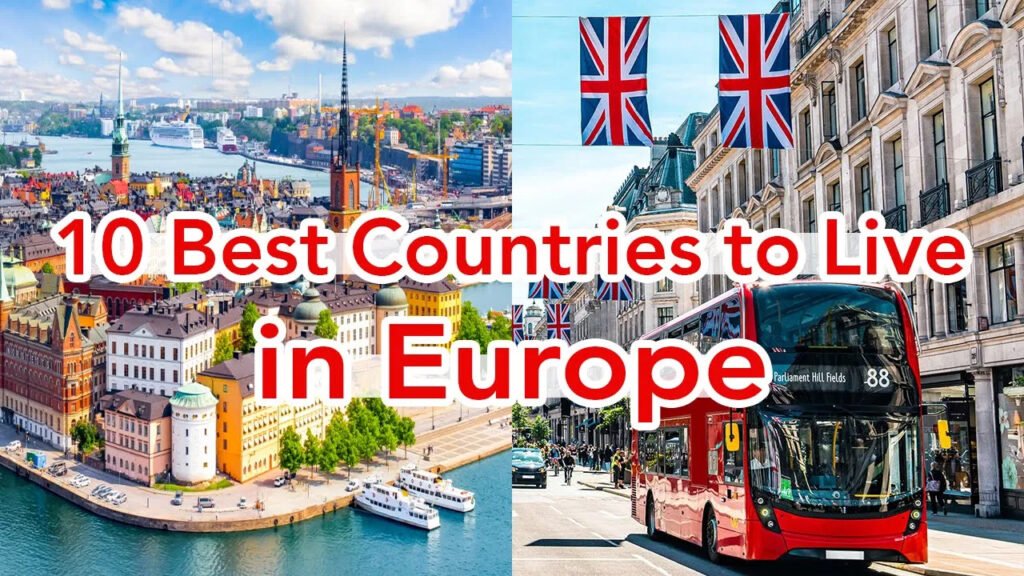
Europe remains the premier global destination for students, professionals, and individuals seeking a higher quality of life, economic security, and world-class educational and healthcare systems. Navigating the top choices requires balancing job availability, living costs, and earning potential.
The following breakdown details the Top 10 Best Countries to Live in Europe based on economic stability, sector opportunities, and average living metrics.
10. Spain

Spain is widely celebrated for its warm, sunny climate and lower living expenses relative to Western European neighbors. The nation provides quality public services, including accessible healthcare and education, fostering a welcoming multicultural environment.
- Key Job Sectors: Tourism, hospitality, agriculture (primarily in southern regions), and construction.
- Primary Job Hubs: Madrid, Barcelona, and the Basque Country.
- Social Integration: Immigrants generally experience strong acceptance and smooth integration.
| Living in Spain | Estimated Amount (EUR) |
| Average Monthly Income (Single) | €1,700 |
| Monthly Living Cost (Single, Excl. Rent) | €700 |
9. Italy

Situated in the heart of the Mediterranean, Italy pairs a rich cultural heritage in art, music, and cuisine with strong public infrastructure. While living costs spike in major metropolises, smaller towns remain affordable.
- Key Job Sectors: Hospitality, fashion, design, and finance.
- Primary Job Hubs: Rome (tourism and public sectors) and Milan (finance, design, and fashion).
- Family & Society: High-quality education and healthcare draw families, supported by a welcoming local population.
| Living in Italy | Estimated Amount (EUR) |
| Average Monthly Income (Single) | €1,600 |
| Monthly Living Cost (Single, Excl. Rent) | €900 |
8. The Netherlands

Boasting a robust, trade-friendly economy in Central Europe, the Netherlands provides exceptional public infrastructure, healthcare, and education. Long-term integration relies heavily on language acquisition and active civic engagement.
- Key Job Sectors: Information technology, clean energy, sustainability, and healthcare.
- Primary Job Hubs: Amsterdam (finance), Rotterdam (trade and logistics), and Eindhoven (R&D and creative industries).
- Market Requirements: Skilled labor is in high demand, particularly for candidates ready to integrate into Dutch culture.
| Living in The Netherlands | Estimated Amount (EUR) |
| Average Monthly Income (Single) | €3,300 |
| Monthly Living Cost (Single, Excl. Rent) | €1,000 |
7. France

Renowned for landmark cultural heritage and diverse geography ranging from the Alps to the Riviera, France features high living standards alongside notable educational programs.
- Key Job Sectors: Medicine, healthcare, IT, fine arts, and scientific research.
- Primary Job Hubs: Paris (finance and commerce), Lyon, and Marseille (engineering and trade).
- Language Requirement: French language proficiency is typically vital for both academic programs and professional success.
| Living in France | Estimated Amount (EUR) |
| Average Monthly Income (Single) | €2,400 |
| Monthly Living Cost (Single, Excl. Rent) | €1,000 |
6. Norway

Norway offers exceptional scenic landscapes alongside one of the world’s most prosperous social welfare models. It features free higher education, robust public services, and high earning potential that offsets elevated daily living expenses.
- Key Job Sectors: Energy (oil and gas), technology, education, scientific research, trade, and healthcare.
- Primary Job Hubs: Oslo (capital), Bergen (coastal trade), and Trondheim (technology and research hub).
- Social Dynamics: Cultural diversity is respected, though seamless integration—especially outside major cities—requires learning Norwegian and respecting local customs.
| Living in Norway | Estimated Amount (EUR) |
| Average Monthly Income (Single) | €3,200 |
| Monthly Living Cost (Single, Excl. Rent) | €1,200 |
5. Denmark

Consistently ranked among the happiest nations globally, Denmark emphasizes work-life balance, strong democratic stability, modern infrastructure, and free public education.
- Key Job Sectors: Technology, engineering, healthcare, finance, research, and education.
- Primary Job Hubs: Copenhagen, Odense, and Aarhus (renowned for international universities).
- Integration Factors: Career growth and local acceptance depend heavily on active economic contribution, local language mastery, and cultural respect.
| Living in Denmark | Estimated Amount (EUR) |
| Average Monthly Income (Single) | €3,400 |
| Monthly Living Cost (Single, Excl. Rent) | €1,100 |
4. United Kingdom

The UK remains a premier global destination due to its global political influence, historic educational institutions, and protective legal frameworks guarding against discrimination.
- Key Job Sectors: Information technology, financial services, construction, retail, hospitality, and logistics/shipping.
- Primary Job Hubs: London, Manchester, and Birmingham.
- Diversity: Deeply multicultural communities across the nation make integration straightforward for incoming expatriates.
| Living in United Kingdom | Estimated Amount (EUR) |
| Average Monthly Income (Single) | €2,900 |
| Monthly Living Cost (Single, Excl. Rent) | €1,300 |
3. Germany

As Europe’s largest industrial power and one of the best countries to work in Europe, Germany balances technological innovation with a manageable cost of living. Expenses in capital hubs like Berlin remain lower than in southern centers like Munich, while standard salaries maintain high living benchmarks nationwide.
- Key Job Sectors: Mechanical engineering, electrical engineering, IT, healthcare, and education.
- Primary Job Hubs: Berlin, Munich, and major industrial regions.
- Language Considerations: English is frequently sufficient for IT and engineering roles, whereas healthcare and teaching strictly demand German fluency.
| Living in Germany | Estimated Amount (EUR) |
| Average Monthly Income (Single) | €2,900 |
| Monthly Living Cost (Single, Excl. Rent) | €1,000 |
2. Sweden

Sweden merges environmental sustainability with cutting-edge tech innovation. Supported by a social safety net delivering free education and healthcare, it absorbs a significant volume of global professionals.
- Key Job Sectors: Information technology, medical specializations (doctors and nurses), mechanical engineering, and electrical engineering.
- Primary Job Hubs: Stockholm and Gothenburg.
- Integration & Language: Swedish society is highly inclusive, though specific clinical and engineering roles mandate Swedish language proficiency.
| Living in Sweden | Estimated Amount (EUR) |
| Average Monthly Income (Single) | €2,700 |
| Monthly Living Cost (Single, Excl. Rent) | €900 |
1. Switzerland

Switzerland tops the global rankings with unsurpassed earning power, economic stability, and premium infrastructure. High costs for housing, transit, and consumer goods are fully balanced by world-leading salaries.
- Key Job Sectors: Banking, finance, watchmaking, healthcare, and technology.
- Primary Job Hubs: Zurich, Geneva, and Bern.
- Cultural Fabric: Boasting a foreign population of roughly 25%, Switzerland’s multilingual structure (German, French, Italian) offers an exceptional environment for skilled international talent.
| Living in Switzerland | Estimated Amount (EUR) |
| Average Monthly Income (Single) | €6,300 |
| Monthly Living Cost (Single, Excl. Rent) | €1,600 |


