 Skip to content
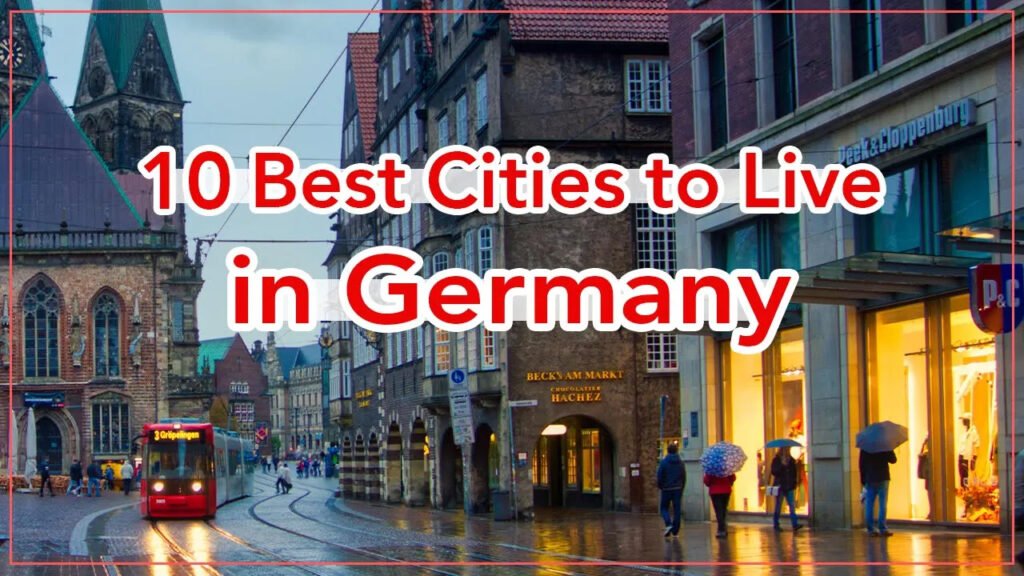
Germany stands as the vibrant heart of Europe, holding the title of the wealthiest and largest country within the European Union. Boasting the largest European economy—and the fourth-largest globally behind the United States, China, and Japan—it is widely regarded as the premier European destination for study, work, and immigration.
Administratively, Germany consists of 16 independent states, comprising over 100 cities, each operating under its own state laws. Based on immigrant feedback, overall quality of life, job availability, average monthly income, and living expenses, here is an in-depth breakdown of The Top 10 Best Cities to Live in Germany.
10. Bonn

Located in the southern region of North Rhine-Westphalia in western Germany, Bonn has a population exceeding 300,000 residents. Historically, it served as the capital of the Federal Republic of West Germany prior to the country’s unification in 1990, at which point the capital relocated to Berlin.
Bonn is globally renowned as the birthplace of legendary composer Ludwig van Beethoven; his childhood home now operates as a world-famous museum. Beyond its cultural heritage, Bonn is a major international diplomatic center, hosting 18 international organizations. It stands as the third-largest United Nations site in Europe and houses the renowned UN Secretariat.
The city is highly popular among foreign students due to the University of Bonn, one of the country’s largest institutions of higher education. Furthermore, numerous global corporations operate here, offering exceptional job opportunities.
| Living in Bonn | Amount (Monthly) |
| Average Net Income (Single Person) | €2,500 |
| Average Cost of Living (Single Person) | €1,100 |
9. Hanover

Hanover, the capital of Lower Saxony, is a major economic hub in northern Germany with a population of over 500,000. Situated on the Leine River, it is home to the state parliament building, multiple higher education institutes (covering medicine, veterinary medicine, music, and banking), and a prestigious university. Transit infrastructure is robust, featuring an international airport, a river port, and a central railway station that handles over 250,000 daily passengers.
Dubbed the “City of Exhibitions,” Hanover frequently hosts world-renowned trade fairs, including CeBIT—one of the world’s premier exhibitions for computer technology and communications. Industrially, Hanover excels in automotive engineering, electrical machinery, chemicals, and food production. Celebrated for its expansive green spaces, the city consistently delivers one of the highest quality-of-life standards in Germany.
| Living in Hanover | Amount (Monthly) |
| Average Net Income (Single Person) | €2,600 |
| Average Cost of Living (Single Person) | €1,100 |
8. Leipzig

As the second-largest city in Saxony with roughly 550,000 residents, Leipzig is an eastern German industrial and commercial stronghold. Historical roots as a center for commerce and book printing endure today alongside one of Germany’s oldest universities. The city hosts the historic Leipzig Trade Fair, a tradition dating back to the Middle Ages that remains pivotal for commerce with Eastern Europe.
Informally nicknamed “the new Berlin” and the “City of Youth,” Leipzig is a favorite destination among young professionals and international students. The New York Times previously named it one of the top 10 global cities to visit, while broader livability rankings place it among the top 70 cities worldwide. As a result, it is widely considered one of the best cities in Germany for international students, offering high-quality education alongside budget-friendly living. Rich in parks, gardens, and forests, Leipzig offers a vibrant cultural scene paired with affordable living costs.
| Living in Leipzig | Amount (Monthly) |
| Average Net Income (Single Person) | €2,600 |
| Average Cost of Living (Single Person) | €1,000 |
7. Stuttgart

Stuttgart, the capital of Baden-Württemberg in southern Germany, ranks as the nation’s sixth-largest city with over 600,000 inhabitants. Steeped in medieval history, it has consistently played a central role in key political and social events throughout European history.
Today, Stuttgart ranks highest among all German cities on general prosperity metrics. Internationally recognized as the automotive capital of luxury brands like Mercedes-Benz and Porsche, the city also thrives as a major hub for media, publishing, and communications agencies. It ranks as one of Germany’s safest metropolitan areas and boasts a diverse international population, particularly residents of Turkish, Greek, and Portuguese descent.
| Living in Stuttgart | Amount (Monthly) |
| Average Net Income (Single Person) | €3,000 |
| Average Cost of Living (Single Person) | €1,100 |
6. Hamburg

Hamburg is Germany’s second-largest city and the sixth-largest in the European Union, home to over 1.8 million people. Operating as both a municipality and one of Germany’s 16 federal states, it is the second-smallest state by geographical area.
Situated along the Elbe River leading to the North Sea, Hamburg features the largest sea port in Germany, making it a critical economic pillar. The city is famous for its intricate waterways and holds the title for the most bridges in Europe—boasting approximately 2,500 bridges, outnumbering those in London, Amsterdam, and Venice combined.
Diplomatically and commercially, Hamburg hosts nearly 90 foreign consulates, ranking third globally behind New York and Hong Kong. Major economic drivers include aircraft manufacturing, chemical industries, consumer goods production, broadcasting, media publishing, and banking. It is also home to the oldest stock exchange in Germany and Europe.
| Living in Hamburg | Amount (Monthly) |
| Average Net Income (Single Person) | €3,200 |
| Average Cost of Living (Single Person) | €1,100 |
5. Cologne

Situated on the Rhine River in North Rhine-Westphalia, Cologne is Germany’s fourth-largest city, with a population exceeding one million. Its most iconic landmark is the Romanesque-era Cologne Cathedral, a globally recognized UNESCO World Heritage Site.
Cologne serves as the primary media capital of Germany, hosting the largest concentration of television and radio stations, while exporting over 70 daily newspapers and magazines across Europe. The prestigious University of Cologne—one of the oldest universities in Germany—makes the city a magnet for domestic and international students.
Following severe floods in 1993, the city implemented world-class flood defense infrastructure. Cultural vitality is supported by over 100 trade exhibitions, 30 museums, and 22 nature reserves, with forests covering more than 15% of the total municipal area.
| Living in Cologne | Amount (Monthly) |
| Average Net Income (Single Person) | €3,000 |
| Average Cost of Living (Single Person) | €1,100 |
4. Frankfurt

Frankfurt am Main, located in the state of Hesse, is the fifth-largest city in Germany with over 750,000 residents. Recognized as the financial capital of Germany and one of the world’s top five financial centers, it houses the European Central Bank, the Frankfurt Stock Exchange, and corporate headquarters for global banks.
Nicknamed “Mainhattan” due to its impressive modern skyline along the Main River—reminiscent of Manhattan in New York—it is home to the Commerzbank Tower, Europe’s tallest office building at 258 meters high. Frankfurt boasts an exceptional transit network, featuring Germany’s largest airport, which ranks second in passenger traffic across Europe. The city also hosts major international events, including the renowned Frankfurt Book Fair.
| Living in Frankfurt | Amount (Monthly) |
| Average Net Income (Single Person) | €3,500 |
| Average Cost of Living (Single Person) | €1,100 |
3. Munich

Munich, the capital of Bavaria, ranks as Germany’s third-largest city with a population of 1.4 million. Located near the Alps along the Isar River, it is widely considered the top preferred city to live in Germany, offering one of the strongest economic ecosystems in Europe.
The city acts as global headquarters for corporate giants such as BMW, Allianz Insurance, aircraft engine producer MTU, and Microsoft’s regional offices. In addition to being a powerhouse for fashion and publishing, Munich attracts over three million tourists annually with its historic palaces, museums, art galleries, and proximity to scenic Alpine lakes. Hosting around 400 trade events every year, it remains a premier international destination for exhibitions and business conferences.
| Living in Munich | Amount (Monthly) |
| Average Net Income (Single Person) | €3,200 |
| Average Cost of Living (Single Person) | €1,100 |
2. Düsseldorf

Düsseldorf is the capital city of North Rhine-Westphalia and the surrounding administrative district, housing over 600,000 residents along the Rhine River. Administratively split into 10 districts—comprising 49 individual towns—each district maintains its own elected council and mayor.
Düsseldorf ranks first in Germany and sixth globally for overall quality of life. Recognized as Europe’s fashion capital, the city hosts over 40 major trade fairs annually, with iconic shopping avenues like the Königsallee serving as the launching pad for international fashion trends.
Beyond retail, Düsseldorf is an economic and technological engine home to one of Germany’s top stock exchanges, 400 advertising agencies, 18 internet service providers, 170 financial institutions, 130 insurance headquarters, and 200 publishing houses. Notable city landmarks include medieval historical quarters and the 240-meter-tall Rhine Tower.
| Living in Düsseldorf | Amount (Monthly) |
| Average Net Income (Single Person) | €3,000 |
| Average Cost of Living (Single Person) | €1,100 |
1. Berlin

Securing the top spot, Berlin is the capital of Germany and its largest city, boasting a population of over 3.6 million residents. Positioned in eastern Germany roughly 70 kilometers from the Polish border, it operates as a city-state (alongside Bremen and Hamburg). It stands as the largest city in the European Union and the second-largest European city overall after London.
Following World War II, the city was divided among Allied powers (the United States, Britain, France, and the Soviet Union), culminating in the construction of the Berlin Wall to separate West and East Germany. Since the demolition of the wall and reunification in 1990, Berlin resumed its role as the national capital.
Today, Berlin serves as Germany’s political, media, and manufacturing epicenter. It is officially the greenest city in Germany, with over 30% of its land area composed of forests, parks, and gardens. Historic landmarks define the landscape, including the Brandenburg Gate, the Reichstag Building, and the Berlin Television Tower—the tallest structure in Germany and the fourth-tallest free-standing tower in Europe.
| Living in Berlin | Amount (Monthly) |
| Average Net Income (Single Person) | €3,000 |
| Average Cost of Living (Single Person) | €1,000 |
Economic Comparison Across All Cities
The composite table below summarizes single-person average living expenses and income across all 10 ranked cities for quick cross-referencing:
| City Rank | City Name | Estimated Living Cost (Monthly) | Average Net Income (Monthly) | Monthly Surplus |
| 10 | Bonn | €1,100 | €2,500 | €1,400 |
| 9 | Hanover | €1,100 | €2,600 | €1,500 |
| 8 | Leipzig | €1,000 | €2,600 | €1,600 |
| 7 | Stuttgart | €1,100 | €3,000 | €1,900 |
| 6 | Hamburg | €1,100 | €3,200 | €2,100 |
| 5 | Cologne | €1,100 | €3,000 | €1,900 |
| 4 | Frankfurt | €1,100 | €3,500 | €2,400 |
| 3 | Munich | €1,100 | €3,200 | €2,100 |
| 2 | Düsseldorf | €1,100 | €3,000 | €1,900 |
| 1 | Berlin | €1,000 | €3,000 | €2,000 |
Whether you prioritize high-tech manufacturing in Stuttgart, global banking in Frankfurt, vibrant student culture in Leipzig, or the unmatched capital energy of Berlin, Germany offers exceptional, high-quality urban living tailored to various lifestyle preferences and career goals.


