 Skip to content
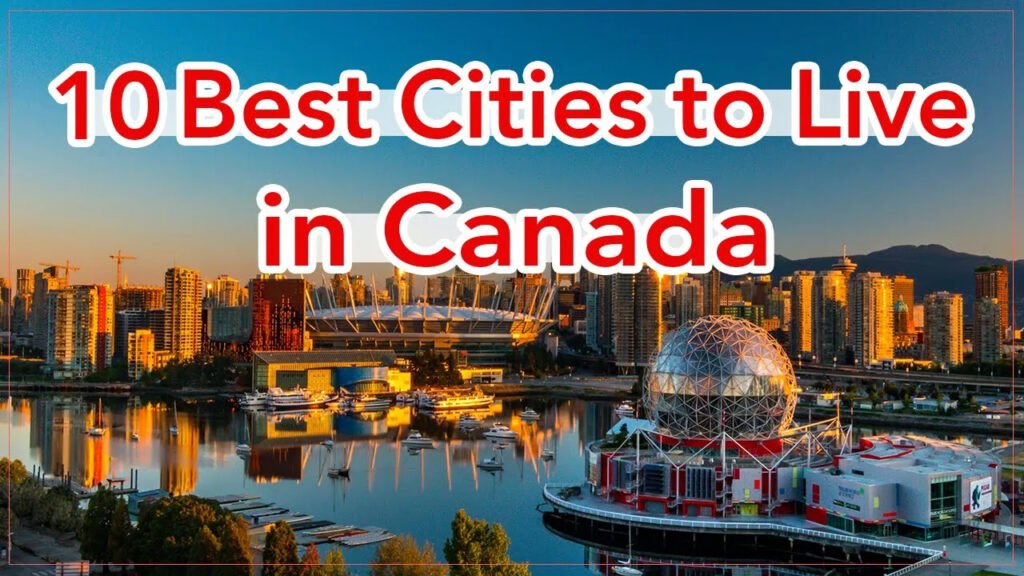
Canada stands out as one of the premier global destinations for immigration, owing largely to its diverse and accessible immigration pathways. Ranked among the top ten countries worldwide for quality of life, Canada offers comprehensive benefits, including publicly funded healthcare for all citizens and permanent residents, exceptional personal safety, and remarkably low crime rates. To help newcomers integrate seamlessly into the local labor market, Canada also provides specialized vocational and professional training programs.
Below is an in-depth guide to the top 10 Canadian cities for newcomers, evaluated on quality of life, employment opportunities, average monthly earnings, and essential living costs.
10. Victoria, British Columbia

Situated on Vancouver Island, Victoria is the picturesque capital of British Columbia. Often referred to as the “Garden City,” Victoria delivers the complete array of amenities expected of a major urban center while maintaining the charm and tranquility of a coastal municipality.
Victoria boasts one of the mildest climates in Canada. Winter temperatures rarely drop below freezing, while summers remain delightfully moderate. The local economy offers robust career opportunities in higher education, technology, agriculture, and marine sectors. Furthermore, Victoria serves as a major port of call for luxury cruise lines.
| Living in Victoria | Single Person Estimate (CAD) |
| Average Monthly Income | $2,487 |
| Monthly Cost of Living (Excl. Rent) | $1,153 |
9. Halifax, Nova Scotia

Positioned on Canada’s eastern seaboard, Halifax is the capital of Nova Scotia. Apart from its land border with New Brunswick, the city is enveloped by the Atlantic waters. Halifax offers a calm, welcoming, and routine lifestyle supported by a diverse demographic base.
As the largest economic hub in Nova Scotia, Halifax features a thriving job market. Prominent sectors include information technology, service industries, digital media, construction, transportation, logistics, commercial fishing, and healthcare. Moreover, residential real estate and rental prices remain significantly lower than in larger Canadian metropolises.
| Living in Halifax | Single Person Estimate (CAD) |
| Average Monthly Income | $2,640 |
| Monthly Cost of Living (Excl. Rent) | $1,070 |
8. Winnipeg, Manitoba

Located in the central geographic region of Canada, Winnipeg serves as the capital of Manitoba. Widely regarded as a hidden gem, the city is celebrated for its warm community atmosphere, vibrant cultural scene, and exceptional affordability.
Winnipeg’s robust, diversified economy spans information technology, manufacturing, healthcare, food processing, agriculture, and heavy transportation equipment production. Through the Manitoba Provincial Nominee Program (MPNP), newcomers receive targeted assistance to secure employment and build sustainable careers. The city’s lower housing costs make initial settlement manageable, while its pro-business climate encourages entrepreneurship. Surrounded by natural landscapes, Winnipeg provides boundless opportunities for outdoor activities like hiking, camping, and fishing.
| Living in Winnipeg | Single Person Estimate (CAD) |
| Average Monthly Income | $2,520 |
| Monthly Cost of Living (Excl. Rent) | $1,000 |
7. Quebec City, Quebec

As one of the oldest settlements in North America, Quebec City is renowned for its European charm and historical depth. Comprising 17 distinct regions, the area offers varied landscapes and rich cultural heritage.
Public safety is a top government priority, resulting in one of the lowest crime rates globally. Residents benefit from public insurance coverage for illness, road accidents, and workplace injuries, as well as family financial assistance in specific circumstances. Because French is the official language, proficiency in French is a key prerequisite for permanent immigration. The local labor market presents opportunities in government, education, and tourism, with flexible work schedules fostering a healthy work-life balance.
| Living in Quebec City | Single Person Estimate (CAD) |
| Average Monthly Income | $2,500 |
| Monthly Cost of Living (Excl. Rent) | $1,000 |
6. Ottawa, Ontario

Canada’s national capital seamlessly blends urban sophistication with small-town warmth. As an officially bilingual city utilizing both English and French, Ottawa prioritizes inclusive community hubs—including cultural centers, churches, mosques, and synagogues—that assist newcomers with guidance and integration. Its multicultural culinary scene features international markets and diverse dining options.
Dubbed the “Silicon Valley of the North,” Ottawa hosts a flourishing technology sector, offering vast career mobility for tech professionals. Furthermore, as the seat of the federal government, Ottawa boasts state-of-the-art healthcare infrastructure, providing residents access to comprehensive care alongside vast career options in health sciences.
| Living in Ottawa | Single Person Estimate (CAD) |
| Average Monthly Income | $3,100 |
| Monthly Cost of Living (Excl. Rent) | $1,000 |
5. Edmonton, Alberta

Known as the “Gateway to the North,” Edmonton is an attractive destination for immigrants due to its lower tax rates, manageable living expenses, and abundant job market. The city is characterized by vast urban green spaces, expansive trail networks, and proximity to the Rocky Mountains.
Edmonton’s economy is powered by a dominant oil and gas industry, supported by strong healthcare and manufacturing sectors. The local real estate market remains remarkably affordable compared to other major Canadian cities. Additionally, legal immigrants—including temporary foreign workers and international students—are eligible for provincial health insurance coverage under Alberta Health Care Insurance Plan. While summer weather is mild, winter temperatures can reach record lows, making it one of Canada’s colder major cities.
| Living in Edmonton | Single Person Estimate (CAD) |
| Average Monthly Income | $2,800 |
| Monthly Cost of Living (Excl. Rent) | $1,050 |
4. Calgary, Alberta

Calgary, the largest city in Alberta, is situated over 1,000 meters above sea level. This high elevation contributes to a dry climate with low humidity. Calgary receives more sunny days per year than any other major Canadian city. Summers reach comfortable highs around 30°C, whereas winters are extended, lasting up to six months, with temperatures occasionally dropping to -40°C alongside heavy snowstorms and long winter nights.
Economically, Calgary stands as one of Canada’s wealthiest cities. It serves as the primary corporate headquarters for the nation’s major energy companies, while also sustaining robust industries in engineering, agriculture, and tourism.
| Living in Calgary | Single Person Estimate (CAD) |
| Average Monthly Income | $3,300 |
| Monthly Cost of Living (Excl. Rent) | $1,140 |
3. Montreal, Quebec

Often called the “Jewel of Canada,” Montreal is the second-largest city in the nation and the largest in the French-speaking province of Quebec. Situated on islands along the St. Lawrence River, Montreal is celebrated for its historic European architecture, arts culture, and world-class culinary, fashion, and theatrical scenes.
Although predominantly French-speaking, Montreal maintains a substantial English-speaking community. The city offers extensive settlement support systems for newcomers and presents key employment opportunities in aerospace, technology, and the creative arts.
| Living in Montreal | Single Person Estimate (CAD) |
| Average Monthly Income | $2,600 |
| Monthly Cost of Living (Excl. Rent) | $1,000 |
2. Vancouver, British Columbia

Nestled along the Pacific coast, Vancouver is internationally acclaimed for its staggering natural beauty, framing mountain ranges, ocean views, and coastal greenery. It consistently ranks at the top for Canadian quality of life and enjoys the mildest climate in the country.
As the largest city in British Columbia and the third-largest in Canada, Vancouver is a vibrant, multicultural hub with prominent South Asian and Chinese communities. The economy expands rapidly across technology, global financial services, higher education, natural resources, and film production. Hosting over 200 film and television productions annually, Vancouver ranks as North America’s third-largest film production center. It is also ideal for outdoor enthusiasts who enjoy cycling, hiking, running, skiing, and beach activities.
| Living in Vancouver | Single Person Estimate (CAD) |
| Average Monthly Income | $3,300 |
| Monthly Cost of Living (Excl. Rent) | $1,100 |
1. Toronto, Ontario

Positioned along Lake Ontario, Toronto is the capital of Ontario and the largest municipality in Canada. Hosting the fourth-largest economic market in North America, Toronto is a dominant global financial, educational, technological, and commercial epicenter.
Toronto is widely recognized as one of the most multicultural cities in the world, welcoming tens of thousands of immigrants annually. Distinct enclave neighborhoods—such as Little Italy, Chinatown, and Greektown—reflect its rich cultural tapestry. The city features landmark attractions like the CN Tower, world-class theater districts, and nearby nature reserves. Career candidates benefit from an expansive job market, particularly within finance, technology, healthcare, and creative industries.
Beyond Canada’s thriving metropolitan centers, North America offers numerous high-growth hubs for professionals and families alike. Expand your search by exploring the 10 best cities to live and work in the U.S. to compare career opportunities, average salaries, and overall quality of life.
| Living in Toronto | Single Person Estimate (CAD) |
| Average Monthly Income | $3,500 |
| Monthly Cost of Living (Excl. Rent) | $1,500 |
National Summary Matrix
| City | Province | Primary Employment Sectors | Average Income (CAD) | Living Cost Excl. Rent (CAD) |
| Victoria | British Columbia | Tech, Education, Agriculture, Marine, Cruise Tourism | $2,487 | $1,153 |
| Halifax | Nova Scotia | IT, Digital Media, Services, Construction, Fishing | $2,640 | $1,070 |
| Winnipeg | Manitoba | IT, Manufacturing, Healthcare, Agriculture, Transportation | $2,520 | $1,000 |
| Quebec City | Quebec | Government, Education, Tourism | $2,500 | $1,000 |
| Ottawa | Ontario | Tech (Silicon Valley North), Healthcare, Federal Govt | $3,100 | $1,000 |
| Edmonton | Alberta | Oil & Gas, Healthcare, Manufacturing | $2,800 | $1,050 |
| Calgary | Alberta | Energy/Oil Corporate HQ, Engineering, Agriculture | $3,300 | $1,140 |
| Montreal | Quebec | Aerospace, Tech, Arts & Entertainment | $2,600 | $1,000 |
| Vancouver | British Columbia | Tech, Finance, Film Production, Natural Resources | $3,300 | $1,100 |
| Toronto | Ontario | Finance, Tech, Healthcare, Creative Sectors | $3,500 | $1,500 |
Each of these cities offers unique advantages, balancing distinct lifestyle preferences, climatic conditions, and economic opportunities to accommodate incoming professionals and families relocating to Canada.


